Water Heater Installation Dublin
No hot water at the kitchen sink, a heater dripping inside the cupboard or a unit that trips the power every morning: these are typical reasons people call us. Our water heater installation service in Dublin covers undersink, oversink and immersion heaters, from quick replacements to fitting a new unit where there wasn't one before.
We check what's already there, recommend a heater that suits the space and the demand, and fit it neatly so it's easy to service later. Gas and oil boilers, however, are outside our work.
Homes, rental properties, offices, cafés and workplaces all fall within our area. That area spans Dublin, while in Co. Kildare it takes in Leixlip, Maynooth and Celbridge as well.
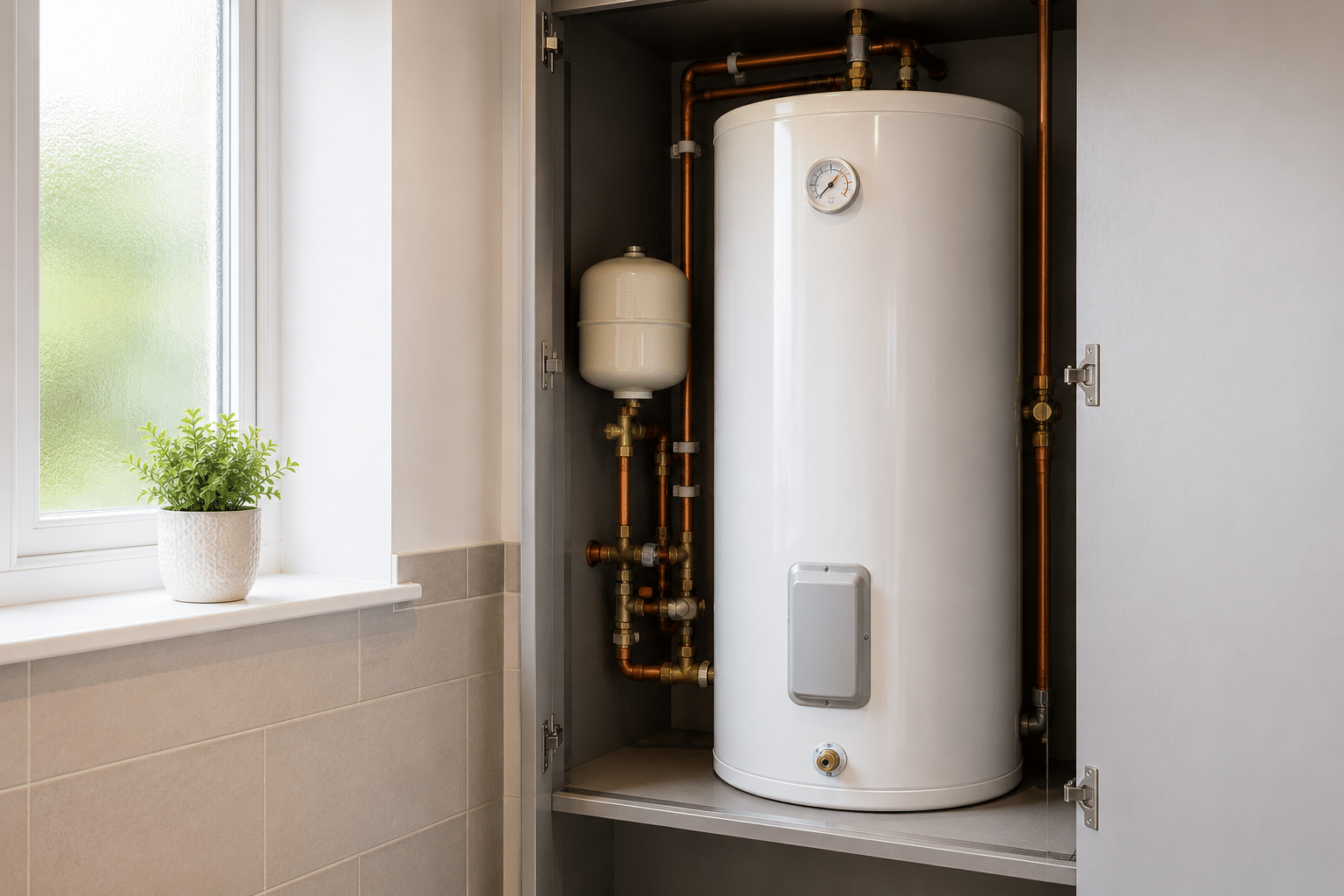
Types of Electric Water Heaters
Most of our heater work involves one of three types:
- Undersink heaters sit in the cupboard below a sink or basin and supply hot water to that one tap.
- Oversink heaters hang on the wall above a sink, common in offices, small kitchens and staff rooms.
- Immersion heaters are electric elements that heat the stored hot water, usually in the hot press.
Undersink and oversink units store a small amount of water, typically between five and thirty litres, and heat it close to where it's used. As a result, you get hot water quickly without running a long pipe from the hot press.
Knowing which type you have is the first step in any job, since each one connects, vents and fails in its own way.
Immersion heaters, by contrast, heat all the stored hot water. In many Irish homes, they back up a boiler or provide hot water on their own.
Signs Your Water Heater Needs Attention
- no hot water, or water that only gets lukewarm
- hot water that runs out much faster than it used to
- the heater tripping the electrics
- water dripping from the unit, its valves or the pipes around it
- rumbling, hissing or popping noises while it heats
- discoloured or rusty water from the hot tap
- a constant drip from the pressure relief or safety valve
Some of these faults are simple, such as a failed thermostat or a stuck valve. Others, like a leak from the tank itself, mean the heater has reached the end of its life.
Keep a note of the symptoms and when they started. That information, along with a photo of the rating label, lets us plan the repair or installation before we arrive.
Either way, water and electricity don't mix. Spot water near the unit? Cut its power at the spur or consumer unit, provided you're standing somewhere dry.
Undersink Water Heater Installation in Dublin
Undersink heaters are ideal for kitchens and utility rooms where the main hot water supply is far away, or where there's no hot supply at all.
There are two main designs, and the difference matters:
Vented, or open-outlet, heaters are not under pressure. They need a special tap designed for them, because a normal tap would stop the water from expanding safely.
Unvented, or pressurised, heaters work with standard taps, but they require the correct safety valves and an expansion arrangement.
Swapping one type for the other without changing the tap or valves causes leaks and poor performance. That's why every installation we carry out starts by identifying which type you have.
We also check the cupboard space. The heater should leave room to reach the valves and the isolator, so future servicing doesn't mean pulling the kitchen apart.
Undersink heaters are also popular in older Dublin houses, where the hot press sits upstairs and the kitchen tap takes a long time to run hot. A small heater under the sink solves that without new pipe runs through the house.
Oversink Water Heater Installation
Oversink heaters are a practical choice for offices, staff kitchens, cafés and small bathrooms. They mount on the wall above the sink and usually feed a spout or a matching tap.
Because they hang on the wall, the fixing matters. We check that the wall can carry the heater's weight when full, and we use suitable fixings for plasterboard, block or brick.
Most oversink units are open-outlet designs, so they work with their own spout or a compatible tap. Replacing a like-for-like unit is usually straightforward. However, changing to a different make may mean moving the connections slightly.
Limescale can slowly reduce performance. When we replace an oversink heater, we also check the inlet filter and valves, so the new unit gets a clean supply from day one.
Fitting an oversink heater in an office is usually quick, since the unit hangs at eye level with easy access to every connection.
Immersion Heater Repairs and Replacement
An immersion heater is an electric element that heats the stored hot water in the hot press. When it fails, the water stays cold or only the top section heats.
Common faults include a burnt-out element, a faulty thermostat and a leak where the element screws in. We replace failed elements and thermostats.
Before replacing an element, we drain down, remove the old unit with the correct tool and fit a new element with a fresh seal. Then we refill, check for leaks and confirm the water heats.
Where the fitting around the element is badly corroded, however, a new element won't fix it, and we'll explain your options honestly.
Timers and control switches sit on the electrical side. Where those need replacing or rewiring, a qualified electrician should carry out that part.
If your immersion runs for hours but the water stays barely warm, the thermostat may be set too low or have failed. We check the setting and the element before recommending any replacement.
Leaking Water Heaters
A leak near a heater can come from several places, and not all of them mean a new unit:
- Inlet and outlet connections, which often just need new washers or hoses
- The pressure relief or safety valve, which may be doing its job because pressure is too high
- Isolation valves below the heater, which can weep from the spindle
- The tank itself, which usually means replacement
We trace the leak to its source before recommending anything. When a connection is at fault, a simple repair saves you the cost of a new heater.
Until we arrive, switch off the heater, turn off the water to it if you can, and clear the cupboard. For wider advice on leaks around the home, Uisce Éireann has a helpful guide.
Water under a sink can damage the unit base and the floor quickly, so it's worth acting the same day.
A safety valve that drips constantly is a warning, not a fault to ignore. It usually means pressure inside the heater is too high, often because an expansion vessel has lost its charge or a pressure-reducing valve has failed. We check those parts first.
How Our Water Heater Installation in Dublin Works
- Survey: we look at the existing heater, the space, the pipework and the electrical supply.
- Recommend: we suggest a heater that suits the demand, the tap and the available room.
- Isolate: we turn off the power and water, then drain the old unit.
- Remove: the old heater comes out, along with any worn hoses or valves.
- Fit: we mount the new heater, connect it with fresh fittings and add the right safety valves.
- Test: we fill the unit, check every joint and confirm it heats correctly.
A like-for-like undersink or oversink swap usually takes two to three hours. New installations take longer, because pipework may need extending to reach the heater's position.
Before we leave, we show you how to isolate the heater and where the safety valves are.
Planned installations during weekday office hours cost less. So unless you're without hot water, it's worth booking a daytime slot.
Choosing the Right Size and Type
The right heater depends on how it will be used, not just on what fits in the cupboard.
- Capacity: a hand basin may need only five litres, while a busy kitchen sink needs more
- Recovery time: how quickly the heater reheats after the hot water runs out
- Vented or unvented: which decides the type of tap you need
- Space: height, depth and room around the valves
- Electrical rating: the heater must suit the supply available at that point
Oversizing wastes electricity and cupboard space. Undersizing, on the other hand, leaves you waiting for hot water. We recommend a size based on how many people use the tap and how often.
If you've already chosen a heater, send us the model details. We'll check it suits your setup before you buy, which avoids costly returns.
For kitchens that need lots of hot water, a larger undersink unit or a heater with a faster recovery time is usually the better choice. For a cloakroom basin, the smallest model is often enough.
Electrical Safety and Water Heaters
Every electric water heater needs a safe, correctly rated supply, normally via a switched spur beside the heater.
Where a job needs new electrical work, such as a new circuit, a higher-rated supply or a relocated isolator, a qualified electrician must complete that part. We'll tell you straight away if your installation needs this, so you can plan for it.
Please don't remove heater covers or thermostat panels yourself. Parts inside carry mains voltage, and the combination with water makes them dangerous.
If a heater keeps tripping the power, switch it off and leave it off until it has been checked. Repeated tripping often signals water getting into the element or the wiring.
Keeping the plumbing and electrical sides clearly separate is part of every safe installation.
Water Heater Installation Dublin for Apartments and Landlords
Many Dublin apartments rely on compact electric heaters, sometimes for the kitchen sink and sometimes for the whole unit. When one fails, tenants lose hot water straight away, so landlords want a quick, reliable fix.
Landlords and letting agents. We arrange access with the tenant, replace or repair the heater and confirm the work afterwards.
Management companies. We can deal with heaters in individual apartments and in communal areas, such as gyms, staff rooms and cleaners' stores.
Tenants. If the heater leaks, switch it off and turn off the water to it, then contact your landlord straight away.
In short-let and student accommodation, heaters see heavy use and frequent resets. A robust model with easy-to-reach controls cuts down on repeat call-outs.
For portfolios with several similar units, knowing the model in advance helps. We can then bring the right replacement and finish in a single visit.
Commercial Water Heater Installation in Dublin
Offices, cafés, restaurants, hotels, B&Bs, pubs and petrol station shops often rely on small electric heaters for hand basins, staff kitchens and cleaners' sinks. When one fails, it can affect hygiene and daily routines.
Factories and warehouses use similar units in welfare areas and canteens, where staff need reliable hot water every shift.
We replace commercial heaters with minimal disruption, and we can work before opening or after closing. Where a building has several heaters of the same age, it's often worth planning their replacement together.
For hotels and B&Bs, an installation can be timed between guest changeovers, so rooms stay available.
Invoices for firms can be settled by transfer, card or cash, and a written job report is available on request.
Keeping Your Water Heater Working
A little care helps a water heater last longer:
- Keep the cupboard around an undersink heater clear, so air can circulate and leaks are easy to spot.
- Check the area under the heater now and then for damp or rust marks.
- Don't use the safety valve outlet as a tap or block it off.
- Switch off a heater you won't use for a long period, such as in a holiday home.
- Book a repair at the first sign of noise, leaks or tripping.
Most compact heaters last many years, depending on use and water quality. When one starts failing repeatedly, replacing it is usually more cost-effective than repeated repairs.
Correct fitting with the right safety valves also keeps the heater covered by the manufacturer's warranty.
Water Heater FAQs
How long does a water heater installation take?
A like-for-like swap of an undersink or oversink heater usually takes two to three hours. New installations take longer, depending on the pipework needed.
Do you supply the heater?
Yes. We can supply a suitable heater, or fit one you've bought once we've confirmed it suits your tap, pressure and space.
Why does my new undersink heater drip from the tap?
Vented heaters expand as they heat, and a small drip from the spout during heating is normal. A constant drip, though, may mean the wrong tap or a faulty valve.
Can you replace an immersion element?
Yes. We drain down, fit a new element and seal, then refill and test.
More Questions About Water Heaters
Do you work on gas water heaters or boilers?
No. We only work on electric water heaters. Gas appliances need a Registered Gas Installer.
Is a leaking water heater an emergency?
It can be, especially near electrics. Switch it off, turn off its water supply and call us.
Can you add a heater where there's no hot water?
Yes. An undersink or oversink heater is a common way to bring hot water to a utility room, garage sink or office kitchen.
Do you cover Co. Kildare?
Yes. Besides Dublin, our water heater installation work extends to Leixlip, Maynooth and Celbridge.
Book a Water Heater Installation in Dublin
Our rates are lowest during weekday office hours. Evening, weekend and bank holiday visits cost more. Hourly rates are shown on our Prices page, and we confirm which one applies by message, where possible before the visit.
Payment is due once the heater is working: cash or card for households, or a texted link, with bank transfer available to firms. Full insurance cover applies, and we tidy up before leaving.
To help us prepare, send photos of the existing heater, its rating label and the pipes around it. See our plumbing services page for other work, and our electric shower replacement page if your shower has stopped heating too.