Tap Repair Dublin
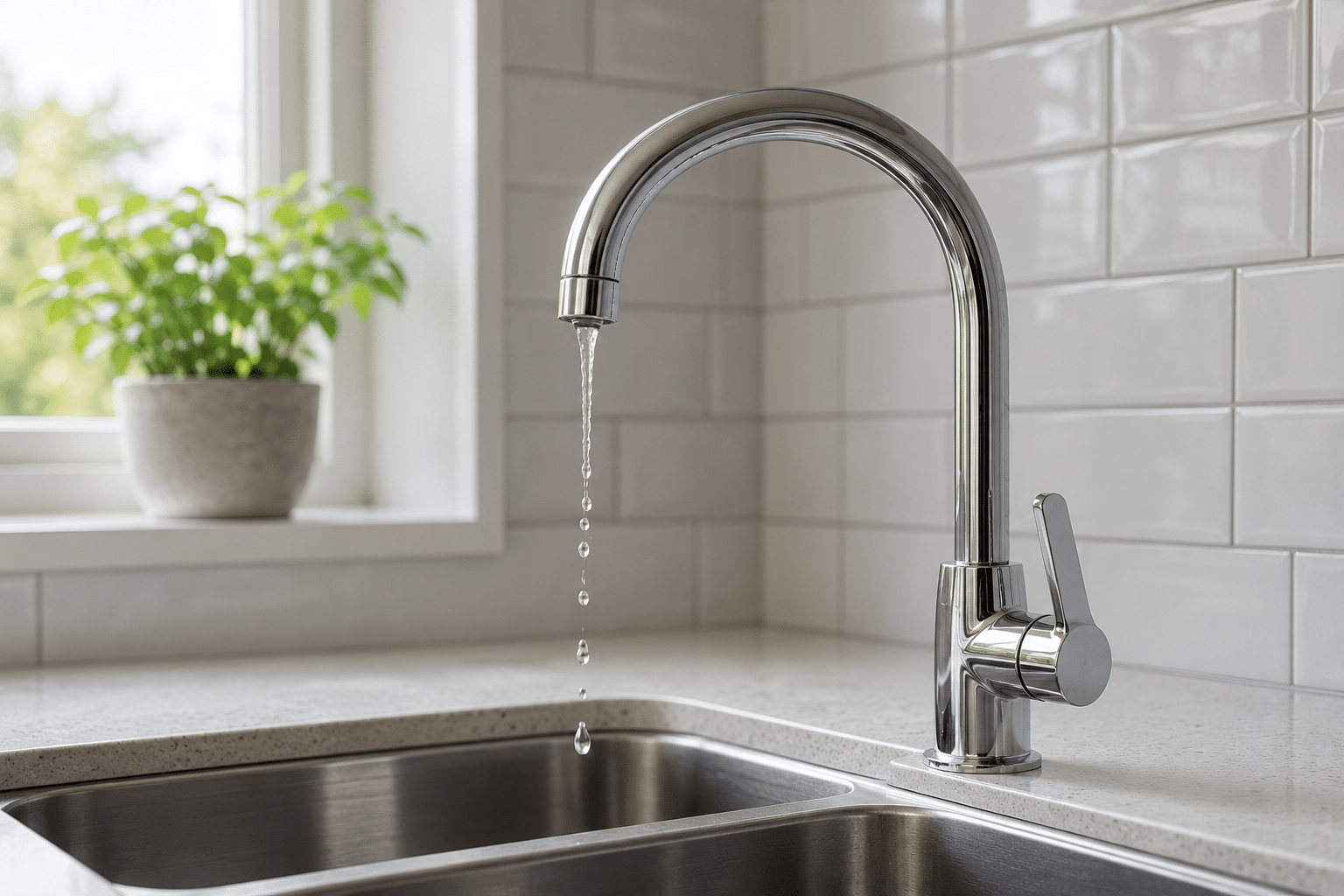
A dripping tap seems like a small thing, until it keeps you awake or leaves a stain in the sink. Our tap repair service in Dublin fixes dripping, stiff, loose and leaking taps in kitchens, bathrooms and utility rooms, and when an old tap has had its day, we replace it.
We work on every common type, from traditional pillar taps to modern monobloc mixers, bath fillers and heavy-duty commercial taps. Because we carry common cartridges, washers and fittings, we fix most taps in a single visit.
Our tap work takes us into homes, rentals, apartment blocks, pubs, restaurants, hotels and workplaces throughout Dublin. Over in Co. Kildare, we also cover Leixlip, Maynooth and Celbridge.
Signs a Tap Needs Repair
Taps usually give plenty of notice before they fail completely. Book a visit when you notice:
- a steady drip from the spout after you turn it off
- handles that turn further than they used to before the water stops
- stiffness, grinding or a clunk when you open the tap
- water seeping from around the handle or the base
- a spout that wobbles or swivels too freely
- weak flow from one tap while the others run normally
- damp or swelling inside the unit under the sink
A single drip every few seconds adds up to a surprising amount of water over a year. For metered properties and commercial premises in particular, that waste is worth stopping. Uisce Éireann also has practical advice on spotting and reducing leaks at home. Fixing a tap early also protects the sink, basin or bath from staining.
Most of these faults are quick jobs. In fact, a typical tap repair takes less time than it takes to find a matching spare in a shop.
Types of Taps We Repair
Knowing what kind of tap you have makes it easier to describe the fault and helps us bring the right parts.
- Pillar taps: separate hot and cold taps, common on older basins and baths
- Monobloc mixers: a single tap body with one or two handles, mixing hot and cold inside
- Bridge mixers: two handles joined by a bridge, often in traditional kitchens
- Single-lever mixers: one lever controls both flow and temperature
- Bath fillers and bath shower mixers: larger taps, sometimes with a diverter and shower hose
- Wall-mounted taps: fixed to the wall, with the pipework hidden behind
Inside, most taps use either a traditional washer or a ceramic disc cartridge. Washer taps need several turns to open and close. Ceramic taps, on the other hand, go from off to full flow in a quarter or half turn. Each type wears differently, so the repair differs too.
If you're not sure which type you have, count the turns needed to close the tap fully. More than one full turn usually means a washer tap. A photo helps too, and it lets us prepare the right parts for the repair.
Dripping Taps: Washers and Cartridges
A drip from the spout is the most common tap repair we carry out. The cause depends on the tap's design.
Washer taps. A rubber washer presses against a seat to stop the flow. Over time, it hardens, splits or wears, and water gets past. Replacing the washer usually solves the problem. If the seat itself is worn, we can often re-face it rather than replace the tap.
Ceramic disc taps. Two ceramic discs slide over each other. When grit scratches them, or the seals behind them perish, the tap drips. Here, we replace the complete cartridge.
Cartridges vary widely between brands and models. So a photo of the tap, and the brand name if you know it, helps us bring a matching part. When a cartridge is no longer available, replacing the whole tap is usually more sensible than hunting for a discontinued spare.
Please don't overtighten a dripping tap to stop it. Forcing the handle only crushes the washer or cracks the ceramic discs, and it turns a simple tap repair into a replacement.
Kitchen Mixer Tap Repair
Kitchen taps work harder than any other tap in the house. They turn on and off dozens of times a day and swivel constantly, so they wear faster.
Leaks at the base of the spout usually come from worn O-rings inside the swivel joint. We replace the seals, and the spout moves smoothly again without leaking.
Pull-out spray hoses can split inside the unit or leak at the connection, which often goes unnoticed until the base of the cupboard swells.
A loose tap that moves on the worktop has a slack fixing underneath. Tightening it, or replacing a corroded fixing, stops the movement before it damages the hoses.
Weak flow from a kitchen mixer often comes from a scaled aerator in the spout, which is a quick fix.
Kitchen mixer problems make up a large share of the tap jobs we do, and most take under an hour.
Bathroom Basin Tap Repair
Basin taps get less wear than kitchen taps, yet they still develop drips, stiffness and loose fittings over the years.
A single threaded rod or bracket holds most monobloc basin mixers in place from underneath. When that works loose, the tap twists as you use it. Because the space under a basin, especially a pedestal or wall-hung one, is tight, we use the right tools to reach the fixing without removing the basin.
Pillar taps on older basins often use traditional washers and can be serviced easily. Where the chrome has worn through or the bodies have corroded, however, a new pair of taps or a single mixer may look and work better.
If you're thinking of switching from two pillar taps to one mixer, check how many tap holes your basin has. A two-hole basin needs either two taps or a special mixer, while a one-hole basin needs a monobloc.
Whatever the style, a basin tap repair is usually straightforward, provided we can reach the connections.
Bath Taps and Bath Shower Mixers
Bath taps and bath shower mixers are larger and heavier than basin taps, and their connections sit behind the bath panel.
Common faults include dripping spouts, a diverter that no longer sends water fully to the shower, leaks at the shower hose and stiff handles. We can fix many of these from above by replacing a cartridge, a diverter or a hose.
Where the problem lies in the connections, we need access behind the bath. If you have a removable panel, the job is simple. If the bath is tiled in, we'll talk you through the options before starting, since we don't want to damage tiles unnecessarily.
Wall-mounted bath taps and thermostatic bath shower valves have their workings in the wall. We can service cartridges and diverters through the front of the valve in most cases.
As with every tap repair, we test the hot and cold supply and the shower function before we leave.
Bath shower mixers in older Dublin houses were often fitted decades ago. Parts for them can be scarce, so a repair in a period home sometimes means sourcing a compatible cartridge from a specialist supplier.
Leaks Under the Sink
When you find water in the cupboard under a sink or basin, the tap is only one possible source. In practice, the fittings below the worktop cause just as many leaks.
- Tap tails and flexible hoses that connect the tap to the pipework
- Isolation valves that seep from the spindle
- Compression joints where the hoses meet copper or plastic pipe
- The tap's own base seal, which lets water down through the worktop
We dry everything, run the tap and watch each joint in turn to find the source. Then we fix that joint rather than replacing everything under the sink.
If the base of the unit has swollen, it's a sign the leak has been going for a while. We fix the plumbing, and we'll tell you if the unit needs attention from a joiner.
A leak under a sink is one of the most common reasons people book a tap repair.
Until we arrive, empty the cupboard, put a bowl under the drip and close the isolation valve on the leaking side if you can. That's usually enough to stop further damage.
Low Flow or Poor Pressure at One Tap
When one tap runs weakly while the others are fine, the problem is usually local to that tap.
Blocked aerators. The small mesh at the end of the spout collects scale and grit. Cleaning or replacing it often restores full flow in minutes.
Blocked cartridges or filters. Some taps have fine filters at the inlet that clog, especially after mains work in the area.
Partly closed isolation valves. A valve left half shut after previous work restricts the flow without anyone noticing.
The wrong tap for the system. Many Irish homes have hot water fed by gravity from a tank in the roof space. Some modern taps need mains pressure to perform properly, so they trickle on a gravity system. When we fit a new tap, we make sure it suits your pressure. This single check prevents many disappointing results.
If every tap in the house is weak, the cause lies further back. Our pump services page explains the usual culprits.
Stiff, Noisy or Hard-to-Control Taps
Taps that are stiff to turn, squeal when you open them or jump from cold to scalding make everyday use unpleasant.
Stiffness usually comes from scale on the moving parts or a worn cartridge. Sometimes cleaning and lubricating the spindle is enough, while other times a new cartridge is needed.
Squealing or hammering when the tap opens often points to a loose washer or a worn part vibrating in the flow. Occasionally, the noise comes from loose pipework under the sink rather than the tap.
Poor temperature control on a mixer can happen when the hot and cold pressures are very different, or when the cartridge is worn. A new cartridge, or balancing the supplies, usually improves it.
Each of these is a quick repair, and fixing them makes a tap feel almost like new again.
If a mixer suddenly runs very hot or very cold, stop using it until we check it. A faulty cartridge can cause sudden temperature changes, which is a scald risk for children and older people.
Repair or Replace the Tap?
Many taps can be repaired several times over their life. Nevertheless, replacement is usually the better option when:
- the body is cracked, corroded or worn through the chrome
- spares for that model are discontinued
- it has needed repeated repairs in a short time
- the tap doesn't suit your water pressure
- you're updating the kitchen or bathroom anyway
You'll see what each route costs before choosing. For a good-quality tap with an available cartridge, repairing usually wins. For a cheap or old tap, however, a new one often costs little more and lasts far longer.
Picking the tap yourself is fine by us. Alternatively, ask and we'll source one. On urgent calls, a spare mixer often travels in the van, which saves an overnight wait for a working kitchen.
Choosing a New Tap
Before you buy a replacement, check a few details, so it fits first time:
- Number of tap holes in the sink, basin or bath
- Pressure rating: whether the tap works on low-pressure gravity systems or needs mains pressure
- Spout height and reach, so water lands in the bowl, not on the edge
- Clearance behind the tap, especially near a window sill or splashback
- Availability of spares, which is better with established brands
Very cheap taps often use non-standard cartridges that nobody stocks. As a result, a small fault can mean replacing the whole tap again within a couple of years.
Send us the product link before you buy, and we'll confirm it suits your system. That quick check avoids the frustration of a tap that looks great but barely runs.
Customers often ask which finish lasts longest. Good-quality chrome is the most durable. Brushed, black and brass finishes look striking, but they need gentler cleaning to keep their appearance.
What Happens During Tap Replacement
- Isolate: we turn off the supply to the tap and open it to release the pressure.
- Remove: the old tap comes out, together with its hoses and fixings.
- Clean: we clean the surface under the tap, so the new seal sits flat.
- Fit: the new tap goes in with fresh hoses and a secure fixing.
- Connect: hoses join the supply, with new isolation valves where needed.
- Test: we run hot and cold, check every joint and set any flow limiters.
A straightforward kitchen or basin tap swap usually takes about an hour. Bath taps and wall-mounted taps take longer, depending on access.
Before leaving, we clean the sink or basin and take away the old tap. We're fully insured, and we'll show you where the isolation valves are, so you can turn off the tap yourself in future.
Every tap repair or replacement we complete ends with this short handover, so you know exactly what we did and how to deal with a drip next time.
Tap Repair Dublin for Households and Rental Properties
Households. Typical requests involve a dripping kitchen mixer, a loose basin tap or a leak under the sink. Planned daytime visits cost less, so it's worth booking before the problem grows.
Landlords and letting agents. Tap faults are among the most common tenant requests. We arrange access, fix the problem and confirm the work, so you don't have to be there.
Apartment blocks. A leak under a kitchen sink in an upper apartment can reach the unit below within hours. Management companies can call us for individual apartments as well as shared kitchens and leisure areas.
Where one owner holds several properties, one planned visit can cover taps, hoses and valves across the portfolio. That kind of preventive work avoids many late-night calls.
Commercial Tap Repair in Dublin
Restaurant kitchens, hotel bathrooms, pub washrooms and forecourt shops at petrol stations put taps through far more use than any household. Cartridges, handles and spouts wear quickly, and a failed tap in a food business can stop service.
We repair and replace kitchen mixers, basin taps and heavy-duty commercial taps in hotels, B&Bs, restaurants, cafés, bars, offices and gyms. In factories and warehouses, we look after taps in canteens, welfare areas and washrooms.
Where several taps share the same model, we can replace worn parts across the site at once, rather than dealing with them one breakdown at a time. We can also work before opening or after closing.
For busy kitchens, we can keep a common cartridge in stock for your model, so the next fault takes minutes rather than days.
Commercial accounts can settle by card, cash or transfer. Please quote the business name at the time of booking.
Tap Repair Dublin FAQs
How long does a tap repair take?
Changing a washer, cartridge or O-ring is normally done in well under an hour. Replacing a kitchen or basin tap usually takes about an hour too.
Can you repair any brand of tap?
We can repair most taps, provided the parts are still available. For older or unbranded taps where spares have gone, a replacement is usually the better option.
Do you supply new taps?
Yes. We can supply a tap on request, or fit one you've already bought once we've checked it suits your pipework and pressure.
Is a dripping tap urgent?
Usually not. A drip can wait for a cheaper daytime visit. However, a tap that won't turn off, or a leak under the sink, needs attention straight away.
More Questions About Taps
Why does my new tap only trickle?
It may need mains pressure while your system is fed by gravity. We can check, and if needed, suggest a tap designed for low pressure.
Can you fit a tap on a new worktop or basin?
Yes, provided the tap holes are already cut. We connect the tap, fit new hoses and test everything.
Will you replace the hoses under the sink too?
We check them on every job. If they're rusty, kinked or perished, we recommend replacing them at the same time.
Do you work in Co. Kildare?
Yes. We repair and replace taps in Leixlip, Maynooth and Celbridge, as well as across Dublin.
Book a Tap Repair in Dublin
Daytime slots on weekdays cost the least; after dark, Saturdays, Sundays and bank holidays are dearer. You'll receive our hourly rate as a message before we set off, and we travel once you confirm.
Households pay by cash, card or payment link when the work is done. Businesses may also pay by bank transfer.
To help us bring the right parts, send a photo of the tap from above and the connections underneath. You'll find other services on our plumbing services page and night call-outs on our 24 hour plumber page. Our Dublin areas page shows local coverage.