Pump Repair Dublin
When a pump fails, the whole house notices. Showers turn to a trickle, taps splutter, and in some homes the water stops altogether. Our pump repair service in Dublin covers booster pumps, shower pumps, well and borehole pumps, sewage pumps and submersible pumps.
We work out why the pump has stopped performing, fix what can be fixed and replace what can't. Just as importantly, we check the rest of the system, because low pressure often has a cause that no new pump would solve.
Homes, apartment blocks, businesses and industrial sites all fall within our work, both in Dublin and in Leixlip, Maynooth and Celbridge over the border in Co. Kildare.
Pumps We Repair and Replace
- Shower pumps that boost a single shower fed from a storage tank
- Whole-house booster pumps that raise pressure to every tap, shower and toilet
- Communal booster sets in apartment blocks, usually two or more pumps in a plant room
- Well and borehole pumps for homes and farms without a mains supply
- Sewage pumps that lift waste from basements and low-lying extensions
- Submersible pumps in sumps, tanks and wells
Each type fails in its own way and needs a different approach. For example, a noisy shower pump often needs only a small fix, while a borehole pump sits dozens of metres underground and takes more planning to replace.
Whatever the type, every pump repair follows the same principle: find the real cause before replacing anything.
Tell us which type you have when you call. If you're not sure, a photo of the pump and its label is enough for us to identify it.
Signs Your Pump Needs a Repair
Pumps rarely fail without warning. Book a repair if you notice:
- pressure that drops suddenly or fades over several weeks
- the pump starting and stopping every few seconds
- a pump that keeps running when every tap is off
- new rattling, grinding or high-pitched noises
- water pooling under or around the unit
- the pump tripping the electrics
- no water at all from a well or borehole supply
A pump that runs constantly or cycles rapidly wears out quickly and uses far more electricity than it should. So even if you still have water, it's worth getting it checked before the motor burns out.
Write down what you notice, such as when the noise started or how often the pump cycles. These details help us plan the repair before we arrive, and they often point straight to the fault.
Low Pressure: Is It Really the Pump?
Many callers assume their pump has failed when the real problem lies elsewhere. Before recommending a new pump, we check the simple things:
- The storage tank. If the float valve sticks, the tank runs low and the pump starves.
- Valves. A partly closed gate or isolation valve restricts flow to the pump.
- Strainers and filters. Debris and scale can block the inlet screen.
- Airlocks. Air trapped in the pipework can stop a pump from priming.
- The pressure vessel. A vessel that has lost its air charge makes pressure swing up and down.
- Leaks. A dripping tap or running cistern can keep a pump working non-stop.
In many cases, fixing one of these restores normal pressure straight away. As a result, you save the cost of a new pump, and the existing one lasts longer too.
That's why an honest pump repair often ends with a cleaned filter or a new float valve rather than a new pump.
If pressure is low across your whole street, however, the issue may be with the public supply. In that case, check Uisce Éireann for local notices first.
How Our Pump Repair in Dublin Works
- Listen to the symptoms. We ask when the problem started, which outlets are affected and what the pump sounds like.
- Check the supply. We look at the tank, valves and filters feeding the pump.
- Test the pump. We run it, measure how it responds and watch the pressure vessel and switch.
- Find the cause. We decide whether the fault lies in the pump, its controls or the wider system.
- Explain the options. You get a clear choice between repair and replacement, with the price for each.
- Complete the work. We repair or replace, then test every outlet the pump serves.
This approach means each pump repair we carry out targets the real fault. It also stops you paying for a new pump when a valve or a pressure switch was the actual problem.
Shower and Booster Pumps in Dublin Homes
Many Irish houses have a cold water tank in the roof space that feeds the taps and the hot press. Water flows down by gravity, which often gives weak pressure upstairs. A booster or shower pump fixes that.
These pumps usually start automatically when you open a tap or shower. That's why a dripping hot tap or a running cistern can make the pump kick in at odd hours, including the middle of the night. When a pump starts by itself, look for a small leak first.
Noise is another frequent complaint. A pump bolted straight onto floorboards or connected with rigid pipe passes every vibration into the house. Anti-vibration feet and flexible hoses usually make a noticeable difference.
Other common faults include worn flow switches, failing seals, air in the system and pumps that have simply reached the end of their life. We carry out booster pump repairs where parts are available and fit a like-for-like or better model where they aren't.
We sort most shower pump problems within a single visit, and a pump repair at home usually takes one to two hours.
Pump Cycling On and Off
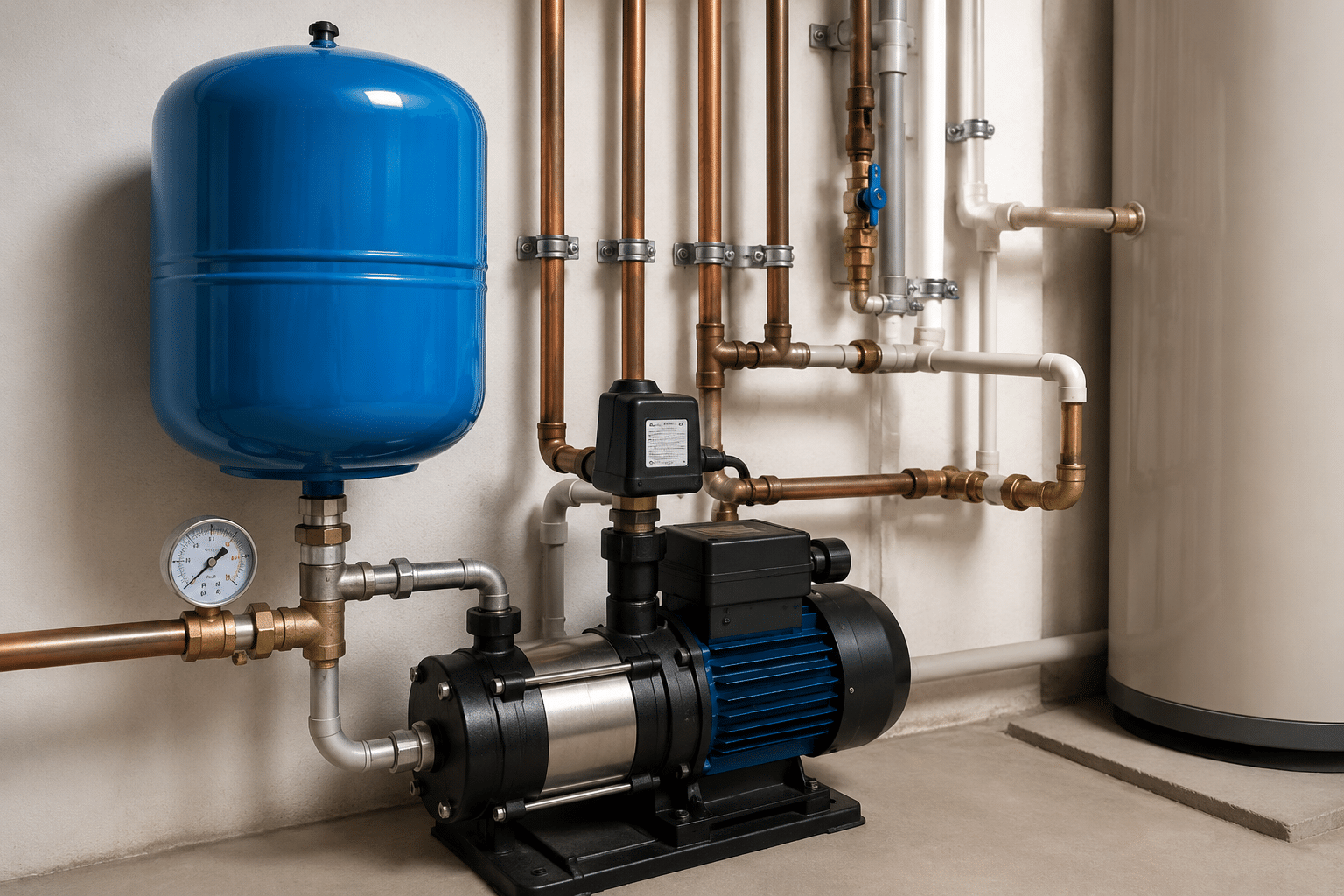
A pump that clicks on and off every few seconds, even while a tap runs steadily, is usually telling you something about the pressure vessel or the switch.
The pressure vessel holds a cushion of air behind a rubber membrane. Over time, that air leaks away. Without it, the pump has nothing to push against, so it starts and stops constantly. Recharging the vessel, or replacing a split membrane, often cures the problem.
The pressure switch tells the pump when to start and stop. When its contacts wear or its settings drift, the pump behaves erratically.
A small leak anywhere in the system can also trigger short bursts of pumping, especially overnight.
Rapid cycling shortens a pump's life dramatically. Therefore, it's worth booking a repair as soon as you notice it rather than waiting for complete failure.
Rapid cycling is one of the most common reasons for a pump repair, and it's often one of the cheapest to fix.
Well and Borehole Pumps
On the edges of Dublin and in parts of Co. Kildare, some homes and farms still rely on a private well or borehole. There, the pump is the only source of water, so a failure is always urgent.
Borehole pumps are submersible units that sit deep underground, connected to a pressure tank inside the house or outbuilding. Shallow wells may use a surface pump instead.
Typical faults include a failed pressure switch, a waterlogged pressure tank, blocked filters, worn impellers and pumps that have lost their prime. When the submersible pump itself fails, we plan its removal and replacement carefully, as the pump, cable and pipe all need to come up together.
For water quality concerns, such as taste, colour or smell, arrange a laboratory test. A well pump repair restores the supply, but only testing tells you whether the water is safe to drink.
During a dry summer, well levels can drop and pumps may run dry. If your pump starts sucking air or pressure fades in hot weather, turn it off and call us before the motor overheats.
Sewage and Submersible Pumps
Basement bathrooms, utility rooms below ground level and some extensions can't drain by gravity. Instead, a sewage pump lifts waste up to the soil pipe.
These pumps sit in a sealed chamber and switch on automatically when the level rises. Common problems include stuck float switches, blocked impellers and alarms that sound without an obvious cause.
Wipes, sanitary products and grease are the main enemies of a sewage pump, so it's worth reminding everyone in the household what shouldn't be flushed.
Submersible pumps in sumps and tanks face similar issues. For instance, debris can jam the impeller or a float can catch on the chamber wall.
If a sewage pump alarm sounds, stop using the connected toilets and sinks, then call us. A quick pump repair usually prevents an unpleasant overflow.
Regular checks help too. Once a year, it's worth lifting the float to make sure the pump starts, and listening for any unusual noise. We can carry out that check as part of a planned visit.
Communal Booster Pump Repair in Dublin Apartments
Taller apartment buildings in Dublin often rely on a booster set in a basement plant room. Typically, two or three pumps share the load and switch between themselves.
When one pump fails, the others may keep up for a while. However, residents on upper floors soon notice weaker showers, especially at busy times. If the whole set stops, the building can lose water entirely.
We work with management companies to diagnose faults in the pumps, pressure vessels, controls and valves of communal sets. Where a single pump needs replacing, we aim to keep the rest of the set running, so residents stay supplied.
Planned work gets scheduled with the managing agent, who can then warn residents about any shut-off. For emergencies, we can attend at night, since a building-wide loss of water is always a priority.
We can also give the managing agent a short written report on the condition of each pump, so the owners' management company can plan replacements before a breakdown.
Repair or Replace the Pump?
A repair makes sense when the pump is relatively new, parts are available and the fault is limited to a seal, a switch or a pressure vessel.
Replacement becomes the better option when:
- the motor has burnt out or the bearings are noisy
- spares for that model have been discontinued
- repeated breakdowns keep bringing you back to the same unit
- it's more than ten to fifteen years old and struggling
- the household's needs have changed, for example after adding a bathroom
We explain the price of both options, so you can choose. A new pump also tends to run more quietly and use less electricity, which matters for a unit that switches on dozens of times a day.
Either way, the goal of every pump repair is dependable pressure without constant attention.
Choosing the Right Replacement Pump
Buying a new pump that simply looks like the old one is a common mistake. Instead, the right model depends on:
- Flow: how many outlets might run at the same time
- Head: how high the pump needs to lift the water
- Supply: whether the pump draws from a tank, a well or a sump
- Gravity feed: whether water already flows to the pump by itself, or the pump must pull it up
- Noise: where the pump sits in relation to bedrooms
- Space: how much room there is in the hot press, attic or plant room
We choose a pump that matches these conditions. As a result, it won't struggle, and it won't be oversized and noisy either.
If you already have a specific model in mind, send us the details and we'll confirm whether it suits your system.
Correct sizing is the difference between a pump that lasts ten years and one that fails in two. That's why every pump repair or replacement we carry out starts with these questions.
What Happens During Pump Replacement
- Make safe: we isolate the power and drain the pipework.
- Remove: the old pump comes out, together with any failed flexible connectors.
- Prepare: anti-vibration mounts and new valves go in where needed.
- Install: we position the new pump and connect it to the pipework.
- Commission: we refill the system, bleed out the air and bring it up to pressure.
- Test: we try every outlet and watch the pump through several cycles.
A straightforward shower or booster pump swap usually takes two to three hours. Borehole and communal pumps take longer, so we normally plan them ahead.
Finally, we clear away the old pump and packaging and leave the area tidy. We're fully insured, and we'll show you how to isolate the pump if you ever need to.
The Electrical Side of Pumps
Every pump needs a safe electrical supply, usually through a fused spur or isolator nearby.
When we replace a pump like for like, we reconnect it to the existing supply. On the other hand, new circuits, a different rating or a relocated isolator are jobs for a qualified electrician, and we'll flag them if they come up.
Similarly, when a pump keeps tripping the electrics, we test the motor first. If the problem turns out to be in the wiring, we'll recommend an electrician.
Please don't open pump casings or control boxes yourself. They contain mains voltage, and water nearby makes the risk far greater. Switching off at the isolator is the safe first step.
Keeping the plumbing and electrical sides separate means we carry out every pump repair safely and correctly.
Commercial and Industrial Pump Repair
Hotels, B&Bs, restaurants, bars and gyms depend on steady water pressure. A failed pump means cold or weak showers for guests and a kitchen that can't wash up.
Factories, warehouses and workshops often have booster pumps serving welfare areas, canteens and process supplies. Some also have sewage or sump pumps in basements and loading areas.
In hotels, pressure problems often show up first on the top floor during the morning rush, when every guest showers at once. That pattern usually points to an undersized or failing booster set rather than a single faulty tap.
We can attend out of hours to limit disruption, and we can plan replacements for quiet periods. Where a site has several pumps, we can also note their age and condition, so you can budget for future replacements.
Business customers can pay by bank transfer, card or cash. Tell us the company details when you book.
For commercial clients, we also keep a note of each pump model we've serviced. That way, a future repair is quicker, because we already know what's installed.
Pump Repair Dublin FAQs
Why does my pump come on when nobody is using water?
Usually because something is leaking, such as a dripping tap, a running toilet or a weeping joint. The pump senses the pressure drop and starts. Fixing the leak normally stops it.
How long does a booster pump last?
Many domestic pumps last around ten years, depending on how often they run and how well the system is set up. Rapid cycling and running dry shorten that life considerably.
Can you repair my pump, or does it need replacing?
It depends on the fault, the pump's age and whether parts are available. We explain both options and their prices before any work starts.
How can I make my pump quieter?
Check that it sits on anti-vibration feet and connects through flexible hoses rather than rigid pipe. If it still hums or rattles, the bearings may be worn, and a replacement is often the quietest fix.
Can you fit a pump I've already bought?
Yes, provided it suits your system. Send us the model details first, and we'll check flow, head and connections.
More Questions About Pumps
My well pump has stopped and I have no water. Is that an emergency?
Yes. When a well or borehole is your only supply, we treat a failed pump as urgent and can attend out of hours.
What should I do if a sewage pump alarm goes off?
Stop using the toilets and sinks connected to it, and call us. Don't open the chamber yourself.
Do you work on communal pumps in apartment blocks?
Yes. We work with management companies on booster sets, pressure vessels and controls in plant rooms.
Is it safe to keep using a pump that trips the electrics?
No. Leave it switched off at the isolator and call us. Repeated tripping can signal water inside the motor or a failing winding.
Do you cover Co. Kildare?
Yes. Outside Dublin, we look after pumps in Leixlip, Maynooth and Celbridge.
Book a Pump Repair in Dublin
What we charge depends on when we come out: weekday office hours are the lowest rate, and out-of-hours, weekend or bank holiday visits cost more. We message you our hourly rate before setting off, and we travel once you confirm it.
Households pay by cash, card or payment link when the job is finished. Firms may also pay by bank transfer.
To speed things up, send a photo of the pump, its label and the pipework around it. More details are on our plumbing services page, night call-outs are covered on our 24 hour plumber page, and our Dublin service area page lists local areas.